
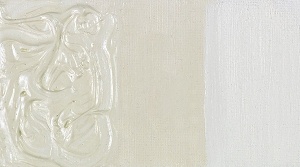
0607 MH Stack Lead White 40ml
R1,960.00
Out of stock
Description
| Colour Index | PW 1 |
| Drying Speed | Extremely Fast |
| Lightfastness | Excellent |
| Tint Power | Slightly Transparent / Average to High |
| Oil Content | Linseed Oil, Very Low |
| Toxic | Yes |
| Conforms To | ASTM D-4236 |
Â
Â
I create this pigment myself in small hand made batches following the time-honored procedure.
Many art historians have noticed there is something in the nature of the Old Masters oil paintsâparticularly in whitesâwhich cannot be replicated with todayâs paints because the method for making them has changed. To recreate the actual white pigment that would have been familiar to Rembrandt, Titian and Vermeer to name a few, I researched lead whites and the old Dutch stack process for many years. Prior to the industrial revolution lead whites were made using a method that traces back before the time of Christ. The Dutch found ways to scale the making of this paint without changing the underlying process in the 13th century.
Using this historic technique, every particle of Stack Lead White is randomly different. So every conglomeration of pigment particles on a nano scale behaves differently. This is precisely the beauty of Stack Lead White. With industrially-made pigments, every particle is identical. So conventional paints cannot be used to create the brush strokes of the whites from centuries ago.
First I take strips of lead and hand roll them into spirals and place them in small clay pots where they stay suspended above a small amount of vinegar. The pots then are buried beneath mounds of steaming, biologically active horse dung. The chemistry is simple: vapors of acetic acid from the vinegar first corrode the lead creating a coating of lead acetate, then carbonic acid from the warm horse dung converts the white corrosion into lead carbonate that forms into the most beautiful white flakes resembling the delicate paper of a waspâs nest. The entire process takes roughly three months depending on season and natureâs variable influence. Once corrosion has taken place the flakes of white are scraped off and ground beneath water. The remaining paste is washed of impurities then laid out in large trays to dry. Once completely dry it is ground again into linseed oil creating the finished product. The result is a hand made pigment and oil paint that assumes the colour of a warm, creamy white like those in found in Rembrandtâs paintings.
The handling quality of Stack Lead White is completely different from industrially made lead white. It possesses a quality known as âthixotropicâ or what seasoned painters refer to as âropeyâ, which means the texture becomes more fluid as it is agitated with a brush or palette knife. Before the paint has been manipulated it is very dense; it can even support a palette knife upright. After the paint has been agitated its consistency changes to short wisps of paint. Continuing to manipulate the paint it starts to become âropierâ and produces long stringy wisps of paint. The addition of texture multiplies the possibilities for complexity and subtlety in the whites of a painting.
According to well known American artist David Leffel, âthis white allows an artistâany artistâlong limpid descriptive brushwork, brushstrokes that reveal the workings and understandings of the mind behind the hand. The long supple quality of stack white that allowed old masters the freedom and expressiveness that enthrals us to this day is, at last, at hand.â
Â
Reviews
There are no reviews yet.